
License Plates are subject to different display laws across the United States, and Indiana has its own rules for where plates must be mounted on a vehicle. Indiana Front License Plate Requirements can depend on the vehicle type, registration category, and applicable state law. Vehicle owners should know whether a front plate is required for their vehicle and how plates must be displayed to avoid registration or traffic-related issues. Proper plate placement helps keep the vehicle’s registration identification visible.
License Plates must be displayed according to Indiana’s current vehicle registration and traffic laws. Questions about front plate requirements often involve passenger vehicles, specialty plates, motorcycles, trailers, and vehicles with different registration classifications. Indiana drivers should review the applicable requirements for their specific vehicle before removing, relocating, or modifying a plate. Knowing the current rules can help vehicle owners maintain proper registration compliance and avoid problems related to improper license plate display.
How to Check Whether Your Vehicle Needs a Front License Plate
Indiana Front License Plate Requirements depend mainly on the type and configuration of your vehicle. According to the Indiana BMV, most vehicles must display their license plate on the rear of the vehicle. A front license plate is required for certain vehicle types, including tractors, dump trucks, and trucks equipped with a rear-mounted forklift or a mechanism used to carry a rear-mounted forklift or implement.
- Indiana BMV – License Plate Display Requirements:
- https://www.in.gov/bmv/registration-plates/license-plates-overview/license-plate-frame-and-sticker-display-requirements
Identify Your Vehicle Type
Start by identifying the type of vehicle you own or operate. For most passenger vehicles and standard vehicles, Indiana requires the license plate to be displayed on the rear. Special placement rules apply to certain tractors, dump trucks, and trucks with specific rear-mounted equipment.
Check the Applicable Indiana Plate Placement Rule
The basic Indiana BMV rule is simple: license plates are displayed on the rear of the vehicle. A front plate is required if the vehicle is:
- A tractor
- A dump truck
- A truck with a rear-mounted forklift
- A truck with a mechanism for carrying a rear-mounted forklift or implement
Your Vehicle’s Equipment Configuration
Check whether your truck has equipment mounted on the rear that affects plate placement. A rear-mounted forklift or a mechanism designed to carry equipment can place the vehicle under Indiana’s front license plate rule. The vehicle’s equipment configuration can matter just as much as its general vehicle category.
Check Mounting and Visibility Requirements
Whether the plate is displayed on the front or rear, Indiana BMV requires it to be:
- Securely fastened
- Positioned horizontally
- At least 12 inches above the ground, measured from the bottom of the plate
- Clearly visible and unobstructed
- Free from frames, covers, or materials that hide text, numbers, or stickers
Confirm Current Rules With the Indiana BMV
If your vehicle has unusual modifications or specialized equipment, review the current Indiana BMV plate display requirements before changing the plate location. This is particularly useful for commercial vehicles and trucks with rear-mounted equipment
Which Vehicles Require a Front License Plate in Indiana?
The answer to does Indiana have front license plates depends on the vehicle category. Indiana does not require a front plate for ordinary passenger vehicles under the standard plate-display rule. The Indiana BMV identifies a limited group of vehicles that must display their license plate on the front: tractors, dump trucks, and certain trucks carrying or equipped to carry rear-mounted equipment. Vehicles outside these listed categories generally follow the rear plate requirement.
Tractors
A tractor is one of the vehicle categories specifically required to display a license plate on the front of the vehicle under Indiana’s plate-display rule. This requirement should not be confused with the rules for ordinary passenger vehicles, which generally display their plates on the rear. Vehicle classification matters when determining the correct plate location. If a vehicle is legally classified as a tractor for purposes of the applicable registration and display requirements, the front placement rule applies.
Dump Trucks
Indiana’s front license plate requirements also specifically include dump trucks. A dump truck must display its license plate on the front, rather than following the standard rear plate placement used for most other vehicles. The Indiana BMV lists dump trucks directly among the categories subject to this requirement. This rule is based on the vehicle category itself, so drivers should avoid assuming that all trucks follow the same plate placement rule.
Trucks With Rear-Mounted Equipment
Certain trucks with specific rear-mounted equipment must display their license plate on the front. The Indiana rule covers a truck with a rear-mounted forklift and a truck with a mechanism used to carry a rear-mounted forklift or implement. The wording is important: the front plate requirement applies to these listed equipment configurations and should not be expanded to every truck with equipment attached to its rear. For these vehicles, front placement helps account for the rear-mounted equipment configuration. The plate must still meet Indiana’s general display requirements, including being securely fastened, properly positioned, clearly visible, and unobstructed.
Indiana License Plate Mounting Requirements
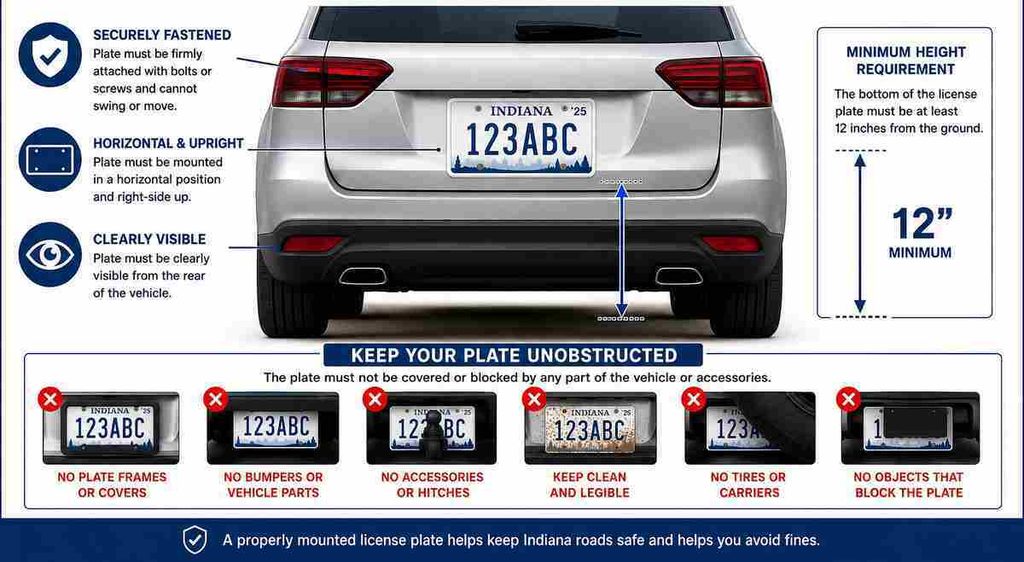
Indiana license plate mounting requirements focus on secure attachment, proper positioning, minimum height, and clear visibility. The Indiana BMV states that a license plate must be securely fastened in a horizontal position and displayed at least 12 inches from the ground, measured from the bottom of the plate. The plate must remain visible, readable, and free from obstruction. These requirements apply whether a vehicle uses the standard rear plate position or falls under a special front plate rule.
How a License Plate Must Be Mounted
An Indiana license plate must be securely attached to the vehicle for which it was issued. The mounting method should hold the plate firmly in place and prevent it from swinging during vehicle operation. A suitable plate bracket or mounting location should keep the plate in a stable position rather than allowing it to hang loosely or move excessively. The plate must be mounted in a horizontal and upright position. It should not be installed upside down, sideways, or in a position that makes the registration information difficult to read. The official display requirements focus on keeping the plate properly positioned and clearly visible after installation. When using a plate bracket, frame, or mounting hardware, check that the equipment does not interfere with the required display area. The plate should remain securely fastened throughout normal driving conditions.
Minimum Height and Position Requirements
Indiana requires the bottom of a license plate to be at least 12 inches above the ground. This measurement is taken from the bottom edge of the license plate, not from the mounting bracket or another part of the vehicle. The correct mounting position also depends on the vehicle type. Most vehicles display their plate on the rear, whereas tractors, dump trucks, and certain trucks with rear-mounted forklifts or mechanisms for carrying rear-mounted equipment must display the plate on the front. Regardless of the required location, the plate must remain securely attached, horizontal, upright, and positioned where it can be clearly seen.
Keeping the Plate Clearly Visible
A properly mounted plate must remain clearly visible and legible. Indiana BMV requirements state that all plate text, numbers, and stickers must be fully visible and not obstructed by parts of the vehicle or foreign materials such as plate frames and covers.
Check the mounting area for anything that could block the plate, including:
- Tires or vehicle parts
- Bumpers
- Accessories
- Plate frames or covers
- Other opaque objects
Do You Need a Front License Plate Bracket in Indiana?
A front license plate bracket does not automatically mean that your vehicle must display a front license plate in Indiana. The legal requirement depends on the vehicle’s classification and Indiana’s applicable plate placement rules, not on whether the manufacturer installed a bracket or provided a front mounting location. Indiana’s standard rule requires license plates to be displayed on the rear of the vehicle. Limited vehicle categories must display a plate on the front.
Does Having a Front Plate Bracket Mean You Need a Plate?
No. Having a front bracket alone does not create a legal front plate requirement. Some manufacturers install front mounting locations because the same vehicle model may be sold in states with different plate laws.
Keep these points in mind:
- A factory-installed bracket does not automatically require a front plate.
- The vehicle’s legal classification determines where the plate must be displayed.
- Most standard passenger vehicles follow Indiana’s rear plate rule.
- Certain specialized vehicles may be required to display a plate on the front.
- A front bracket becomes useful when front plate placement is legally required.
Indiana’s front plate rule applies to specific vehicle categories, including:
- Tractors
- Dump trucks
- Trucks with a rear-mounted forklift
- Trucks with a mechanism used to carry a rear-mounted forklift or implement
For a typical passenger vehicle, the presence of a front mounting bracket does not by itself mean that an Indiana license plate must be installed there. What matters is the applicable legal plate placement requirement for that vehicle.
When front placement is required, the plate should be properly mounted so it remains:
- Securely fastened
- Horizontal and upright
- Clearly visible
- Unobstructed
Can You Put a Decorative Plate on the Front of Your Indiana Vehicle?
A decorative plate on the front of an Indiana vehicle is different from an official registration plate issued for legal vehicle identification. Indiana’s plate display rules generally require the official registration plate to be displayed on the rear of most vehicles. This applies regardless of whether the vehicle uses Electric Vehicle License Plates or another eligible plate type. A decorative or novelty plate used for appearance does not replace the official plate or change the required location of the registered vehicle plate.
Decorative Plates and Official Registration Plates
Decorative plates may contain designs, logos, messages, graphics, or other visual elements intended for vehicle appearance. These plates are not issued as official registration plates and cannot serve as proof of vehicle registration. The official Indiana license plate remains the plate connected to the vehicle’s registration and must be displayed according to the applicable Indiana requirements.
Vehicles That Require an Official Front Plate
Certain vehicle categories have different placement requirements. Indiana requires official front plate display for tractors, dump trucks, and certain trucks equipped with rear-mounted forklifts or mechanisms used to carry rear-mounted equipment. For these vehicles, a decorative or novelty plate cannot replace the official registration plate required by the applicable display rule. Before adding a decorative front plate, vehicle owners should keep the difference between appearance accessories and legally required registration plates clear. The vehicle’s official plate placement remains subject to Indiana’s current display requirements.
Front Plate Accessories on Standard Vehicles
Most standard passenger vehicles in Indiana follow the rear license plate display requirement. A decorative item placed on the front of the vehicle is separate from the official registration plate, provided the vehicle continues to meet applicable registration and equipment requirements. The decorative plate should not be treated as an official front registration plate where Indiana plate law does not require one.
License Plate Frames, Covers, and Obstruction Rules
Indiana front license plate law and plate display requirements focus on keeping required registration information clearly visible. A license plate frame or cover may be used only if it does not obscure the plate’s text, numbers, or registration stickers. Indiana BMV guidance warns against frames or covers that interfere with required plate information. These rules apply to official plates displayed on either the rear or, for certain vehicle types, the front.
Are License Plate Frames Legal?
License plate frames can be used in Indiana, provided they do not block required plate information. Before using a frame, check that all important parts of the plate remain visible, including:
- Plate numbers and letters
- Registration stickers
- Required text on the plate
- Other identifying information
Frames with thick borders, decorative edges, logos, or oversized designs can create a visibility problem if they cover part of the plate. This applies to decorative frames, promotional frames, and dealership frames.
Can a Plate Cover Cause a Visibility Problem?
A plate cover can create a visibility problem if it affects the readability of the required registration information. Indiana BMV guidance warns that covers and other materials must not obstruct the plate’s required details.
Check your plate cover for:
- Blocked text or numbers
- Covered registration stickers
- Reduced readability
- Opaque or damaged material
- Anything that prevents a clear view of the plate
Dirt, accessories, vehicle parts, and damaged covers can create similar issues if they prevent the plate from remaining clearly visible. Checking the entire plate after installing a frame or cover can help keep the required information unobstructed.
Front License Plate vs Rear License Plate in Indiana
The difference between a front license plate and a rear license plate in Indiana depends on the vehicle type and configuration. Most vehicles must display their official license plate on the rear. Indiana has specific exceptions requiring certain vehicles to display the plate on the front.
| Vehicle Type or Configuration | Required Plate Location | Indiana Rule |
|---|---|---|
| Most passenger vehicles | Rear | Standard rear plate placement applies |
| Most other standard vehicles | Rear | Official plate is displayed on the rear |
| Tractors | Front | Front plate placement is required |
| Dump trucks | Front | Front plate placement is required |
| Truck with a rear-mounted forklift | Front | Front placement applies because of the listed vehicle configuration |
| Truck with a mechanism to carry a rear-mounted forklift or implement | Front | Front plate placement is required |
| Interim license plates | Rear or permitted rear-facing window location | Must follow applicable display requirements |
What Happens if You Do Not Follow Indiana License Plate Display Requirements?
Failing to follow Indiana license plate display requirements can create traffic enforcement concerns and may result in a violation under the applicable state law. Indiana requires plates to be displayed in the proper location for the vehicle, securely fastened, horizontal and upright, clearly visible, and free from obstruction. The Indiana BMV also states that plate text, numbers, and stickers must remain fully visible.
Improper Plate Placement
A vehicle may have an improper plate display if the official license plate is mounted in a location that does not match Indiana’s applicable requirements. Most vehicles use rear plate placement, but tractors, dump trucks, and certain trucks with specified rear-mounted equipment must display the plate on the front. Improper placement can become an enforcement issue even if the plate itself is valid and properly registered. The location and manner in which the plate is displayed both matter under Indiana’s requirements.
Obstructed or Improperly Mounted Plates
A plate can also create a compliance problem when required information is blocked or difficult to read. Indiana BMV guidance warns against plate frames, covers, and other materials that obscure text, numbers, or stickers.
Display concerns include:
- A plate frame covering text or stickers
- A cover affecting plate visibility
- A plate mounted in the wrong location
- A plate that is not securely fastened
- A plate positioned so it cannot be clearly seen
- An object or vehicle accessory blocking required information
Frequently Asked Questions
The following frequently asked questions explain Indiana front license plate requirements, including which vehicles need a front plate and why most vehicles follow the standard rear plate rule. Indiana’s plate placement requirements depend primarily on the type and configuration of the vehicle.
Do you need a front license plate in Indiana?
Most vehicles in Indiana do not need a front license plate. Indiana generally requires the official license plate to be displayed on the rear of the vehicle. A front plate is required only for certain vehicle categories listed under the state’s plate display rules, including tractors, dump trucks, and specified trucks with rear-mounted equipment.
Does Indiana require front license plates?
Indiana does not require front license plates for every vehicle. The standard rule places the license plate on the rear of most vehicles. Front placement applies to specific exceptions based on vehicle type or equipment configuration. This means a typical passenger vehicle generally follows the rear plate requirement rather than displaying official registration plates on both ends.
Does Indiana have front license plates?
Yes, Indiana has front license plate requirements for certain vehicles. The Indiana BMV states that tractors, dump trucks, trucks with rear-mounted forklifts, and trucks with mechanisms designed to carry a rear-mounted forklift or implement must display their license plates on the front. Most other vehicles use rear plate placement.
Is Indiana a one-plate state?
For most standard vehicles, Indiana functions as a one-plate state, with the official registration plate displayed on the rear of the vehicle. Drivers of ordinary passenger vehicles generally do not receive a requirement to display matching official plates on both the front and rear. Certain specialized vehicle categories are exceptions and must display their plate on the front instead.
Which vehicles require a front license plate in Indiana?
Indiana’s official plate-display requirements identify specific vehicles that must display the license plate on the front. These include tractors, dump trucks, trucks with a rear-mounted forklift, and trucks equipped with a mechanism used to carry a rear-mounted forklift or implement. The exception should be interpreted according to the listed vehicle categories rather than applied broadly to every commercial truck or vehicle with equipment attached to it. Most other vehicles follow the standard rear plate placement requirement.